Banner

Banner

Thursday, April 7, 2016

Spectrum - Street Art 2016

What do Urban Jungle, Soles, Icarus, Deow, Telmo and Miel, Seth, etc have in common?
They are all street artists.

Twelve months ago, I blogged several times regarding Spectrum 2015 and the display at the YMCA plus new street art around the city.
Well, it's here again in 2016 - and if I understood correctly, this is going to be an annual event for at least the next five years and the venue at the YMCA is to be set up as a permanent home for street art displays. Great news.
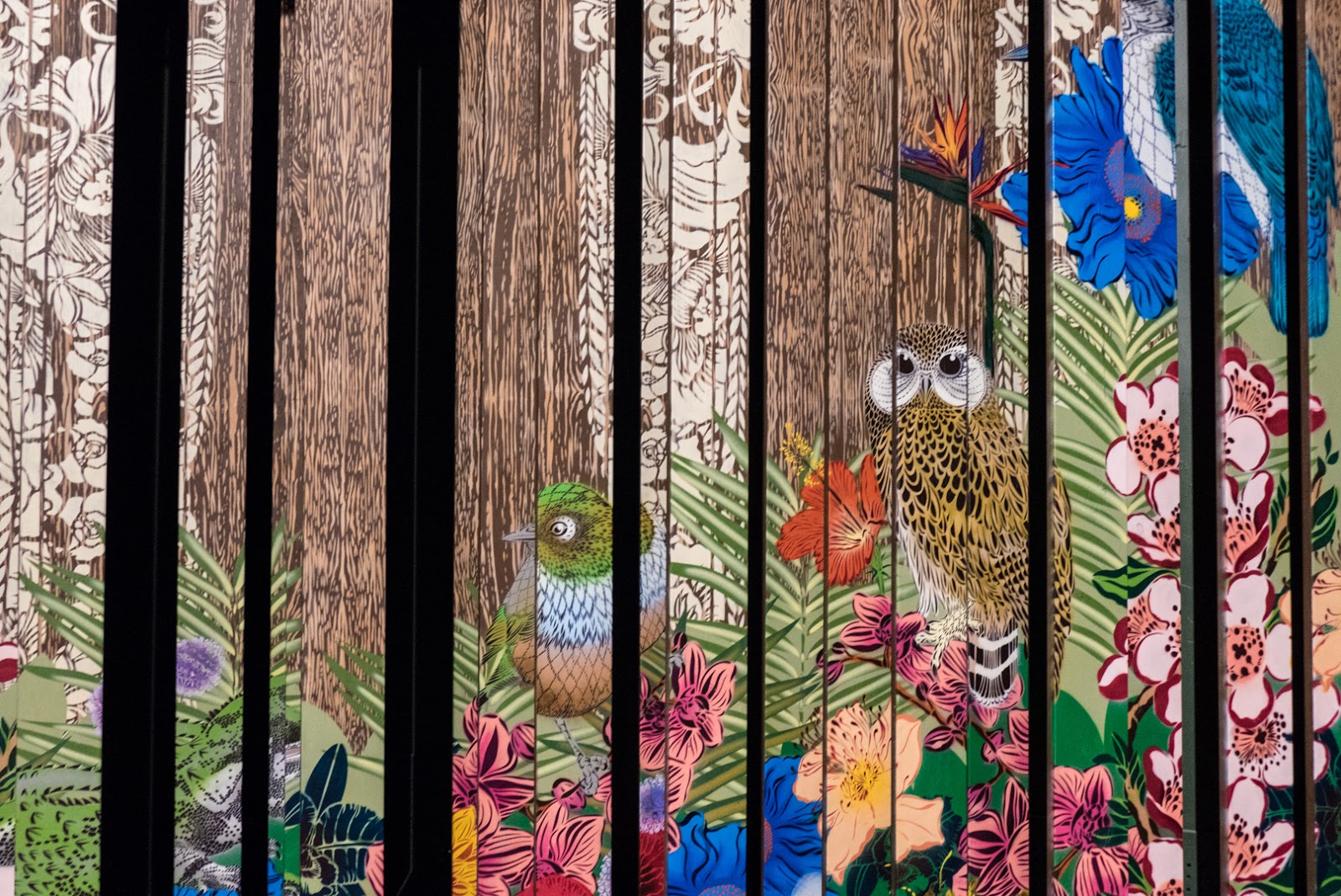
Below are some of the artworks at the YMCA this year.

As well, there are new street arts on various walls in the CBD. I haven't had the chance to bike around and view these yet, but I will - and soon.

As new ones are painted, others will disappear as new buildings are erected in rebuild of the city. Maybe in another 100 years - as happened after the earthquake a couple of years ago - these new buildings will be demolished and future  generations will discover these artworks. I'll post the new ones in due course.


The first artwork you come to is a 3D display on clear perspex - ~4-5 layers of it. You zig zag your way through these layers and come to the front - to the right you see the top image (above), to the left you see the lower image (above).
But...... if you carefully align yourself, you see this (below). Very clever!!


Other artworks ..............


There is one artist (a local - maybe Canterbury) whom I feel is worthy of mentioning. His work is on display year after year. Milton Springsteen - obviously his art name, but the way he takes examples of well known art and reproduces them with a twist is clever. Three examples are scattered in the above group.

Wednesday, April 6, 2016

Huts 04 - The Crow Valleys

In the Canterbury region especially, every tramper serves his or her apprenticeship gaining obligatory blisters tramping up the Waimak from Klondyke Corner near Arthur's Pass.
Back in the 1960s I used to tramp up to Carrington - and beyond - every two to three weeks. Easter was a classic time to be in the valley. Back the the CMC used to hold it's annual Easter Camp there. Invariably almost every mountain in the region was summited by at least several pairs of tricounied boots!
I well remember finding myself walking alongside John Pascoe chatting away as we walked up the riverbed in the moonlight to Anti Crow hut. One afternoon I trekked back up to Temple Col to search for the bum strap off my Mountain Mule pack, then returning to the the Pass and walking down the railway line to Klondyke and then up to Anti Crow hut, arriving about 1am - only to return downriver first thing the next morning.
Approximately 1.5 hours up river from Klondyke Corner, two major rivers enters the Waimak directly opposite each other - on the true left is the Crow River and on the true right, the Anti Crow river.
This area was well huttted. The CMC hut at the Anti Crow, CMC's Gizeh Biv in the headwaters of the Anti Crow, the NZAC hut at the head of the Crow - and the six bunk NZFS hut on the Waimak flats 15 minutes downstream of the Anti Crow.

Anti Crow hut (circa late 1960s)
 Sometime in the 1970s the CMC relinquished ownership of the Anti Crow hut to the Arthurs Pass National Park. This was to take effect on 1st January. Sadly, on the evening of 31st December, the hut burned down after hot embers fell through a hole in the floor from the open fire. Purely an accident, but most unfortunate timing.

Anti Crow hut after the fire
The Crow hut was owned by the New Zealand Alpine Club. It was replaced by a new hut in the 1980s.

The old Crow hut in the late 1970s - my daughter Rachael
The new Crow hut
Back over to the Anti Crow Valley, Gizeh Bivi at the head of the valley was always a favourite place of mine. On the edge of the bush line, the bivi was nestled into the bush right next to a large tree - a tree which was to be the bivi's demise. In a big storm the tree toppled a fell through the bivi, crushing it totally. Fortunately, no-one was inside at the time. It was never replaced. It was built of old tea cases - pressed tin. There were several of these bivis dotted around the APNP. Sadly none remain now. There were no bunks - just tussock on the floor.

Gizeh Bivouac
So there you have it. In three blogs I've chatted about all the huts in the Waimakariri Valley, within the bounds of the APNP.


Monday, April 4, 2016

Corrugated Iron

I've always had a love of corrugated iron. I don't recall when it all started, but I suspect it may have had something to do with old musterers huts in the mountains. Whilst modern huts are nice and comfortable, there is nothing to beat arriving at an old musterers hut after of day of slogging through Canterbury tussocks.
On returning from overseas several weeks ago, I quickly learned that there was a Corrugations exhibition on at the museum, closing at the end of Easter. A no-brainer. We had to visit - and we were not disappointed.


The artist was Jeff Thompson and also his partner, Shona Cameron. The image above explains his background.

The first display on entering the exhibition was a Morris minor car. Now I have owned three of these vehicles and have an ongoing love of them - just like my fondness for corrugated iron.


Below are a few more of their artworks on display. There are far too many to show them all. If you get the opportunity, go see the exhibition if it comes to you. Or go see it at the Tauranga Art Gallery when the tour is completed.


We still dream of building a new home one day. Somewhere and somehow, we'll incorporate some corrugated iron into the design.

Wednesday, March 9, 2016

Huts 03 - Waimak Falls

Waimak Falls hut sits at the head of the Waimakariri River, about three hours walk above Carrington hut. It is just above the Waimak Falls themselves, accessible after a steep grunt up from the river just below the falls. Many people are unaware that there is a waterfall on the Waimakariri River. They are hidden from view, but well worth the scramble up the riverbed for ten minutes from where the track climbs steeply up and away from the riverbed before the hut.

Waimak Falls hut with Waimak Col on the Main Divide in the background.
Waimak Falls hut would arguably have one of the more commanding views in the mountains of NZ. The views up towards Mt Rolleston, Mt Armstrong and Waimakariri Col are awesome - and the views down valley to Mt Carrington and away to Mt Murchison at the head of the White River (the highest peak in Arthur's Pass National Park) are equally spectacular.
The hut is a six bunker and has a chequered history. It was first built by the Canterbury mountaineering Club and then passed over to the Dept of Conservation (from memory in the late 1970s). More recently the CMC regained ownership of the hut and a dedicated team of CMC hut volunteers now look after it along with all the other CMC huts.
My very first rescue as a member of mountain search and rescue in the 1960s was up to this hut when a tramper burned his face and hands after his cooking stove exploded and set alight to the tent he was in, pitched close to the hut.
Finally, one of the best photographs I've ever seen of Waimak Falls hut is in the book 'Our Mountains - Journeys to New Zealand's High Places' by Paul Hersey and Mark Watson. See page 95. It is well worth looking at and will give you an inkling of just how well situated this hut really is.

Tuesday, March 8, 2016

What a Difference a Day Makes!

My lovely sister is currently crewing on a yacht sailing from Waikawa near Picton down to Stewart Island, then back up to D'urville Island and eventually back to Waikawa - just two of them in a 30' boat. Not bad for a young girl of 76!
Last weekend they were in Akaroa to resupply and wait for some good weather. Sunday morning was relatively free for me so I set off for Akaroa at sparrowfart.
For me, no trip to Akaroa - or anywhere on the peninsula for that matter - is complete without a quick side trip to Birdlings Flat. There are as many moods to that beach as there are days in the year - and more! Early Sunday morning I had the beach to myself. Absolute tranquility in more ways than one.
I don't recall ever seeing the sea so flat and waveless.

Birdling's Flat on Sunday
Compare this to a day a few years ago at the end of a good Southerly blast. This image was posted here back in June 2014 in a post about Kaitoreti Spit, but thought it was worth airing again for comparison.

Birdling's Flat a few years ago after a Southerly Storm
Oh and here is my lovely sister heading back out to the yacht on Sunday morning.


Friday, February 26, 2016

Hut 02 - Carrington

There would be very few trampers and mountaineers that have not spent at least one night at Carrington Hut.
It is positioned at the junction of the Waimakariri and White rivers in Arthurs Pass National Park, and is a strategic hut for trampers and mountaineers alike. Further up valley is the Barker hut (see Huts 01) and Waimak Falls hut (a future blog) - both stepping off points for serious climbing and also remote tramping. Harrington hut is the first stopping place on the Three Pass Trip from Klondyke Corner to Hokitika.

The second Carrington hut
This hut (above) is the hut I first remember. My first foray up the Waimak was about 1961-2 at the ripe old age of 13-14. It was the second hut at the junction. The first hut was located further out towards the Waimak riverbed and was washed away in a flood. It was built in 1929 and named after Gerard Carrington who was co-instumental in forming what was to become the Canterbury Mountaineering Club (which I joined in 1964 and have been a member ever since). Sadly he was drowned in the Waimak gorge before the hut was completed. The hut above replaced the original hut and sat up on a terrace well away from flooding.
Below this second hut there was a small four bunk NZFS (New Zealand Forest Service) hut (see below) - a handy overflow hut, especially at Easter in the 1960s when there was always an Easter Climbing School run by the CMC. I have spent a night in this four bunk hut with eleven trampers crammed inside. My 'bunk' was up in the rafters lying on a climbing rope wrapped around the rafters. A very uncomfortable night!!

NZFS hut below Carrington hut - November 1967
Sadly both these huts have long gone, and been replaced by the current Carrington hut, a Lockwood design, and capable of hosting many trampers and climbers.

The current Carrington hut
Whilst this hut is perfect for large parties visiting the upper Waimak - and I have no doubt that some busy weekends it is full to capacity with tents pitched close by. For me, it is a soulless dwelling - it echoes with every footstep inside - and will never have that character that many remote and older back country huts have. The smell, the stories in the old hut books, the writing on the walls (not graffiti). But still, it does provide a refuge on a stormy night and it is a stepping stone to remoter places up valley.
In this hut's early days, it had a sign above the entrance saying 'Carrington Hilton'. Sadly, the Hilton hotel chain had no sense of humour and after a court case, the sign had to be removed!
A think I may as well complete the Waimakariri huts in the near future so watch this space.


Monday, February 22, 2016

Crossing the Empty Quarter #3

I posted a blog a few days ago re the journey including eight images..... and then promised a few more. So here are eight more for your interest. If anyone wants more, please indicate with a comment. Otherwise, this it! Enjoy.

The last day - outskirts of Doha 
Oman - Saudi border again - Military post of Kyran in distance  
Campsite view - Rub Al Khali 
The Khanger worn by Bin Kalut in 1930 - it has now done the journey twice 
Another day in the Rub Al Khali 
Early start to day in the southern Rub Al Khali 
Deep in the Rub Al Khali 
Doha skyline - Thomas had to travel by Dhow to Bahrain to break the news of his success in February 1931


First Car

I talked about a city bike ride yesterday.
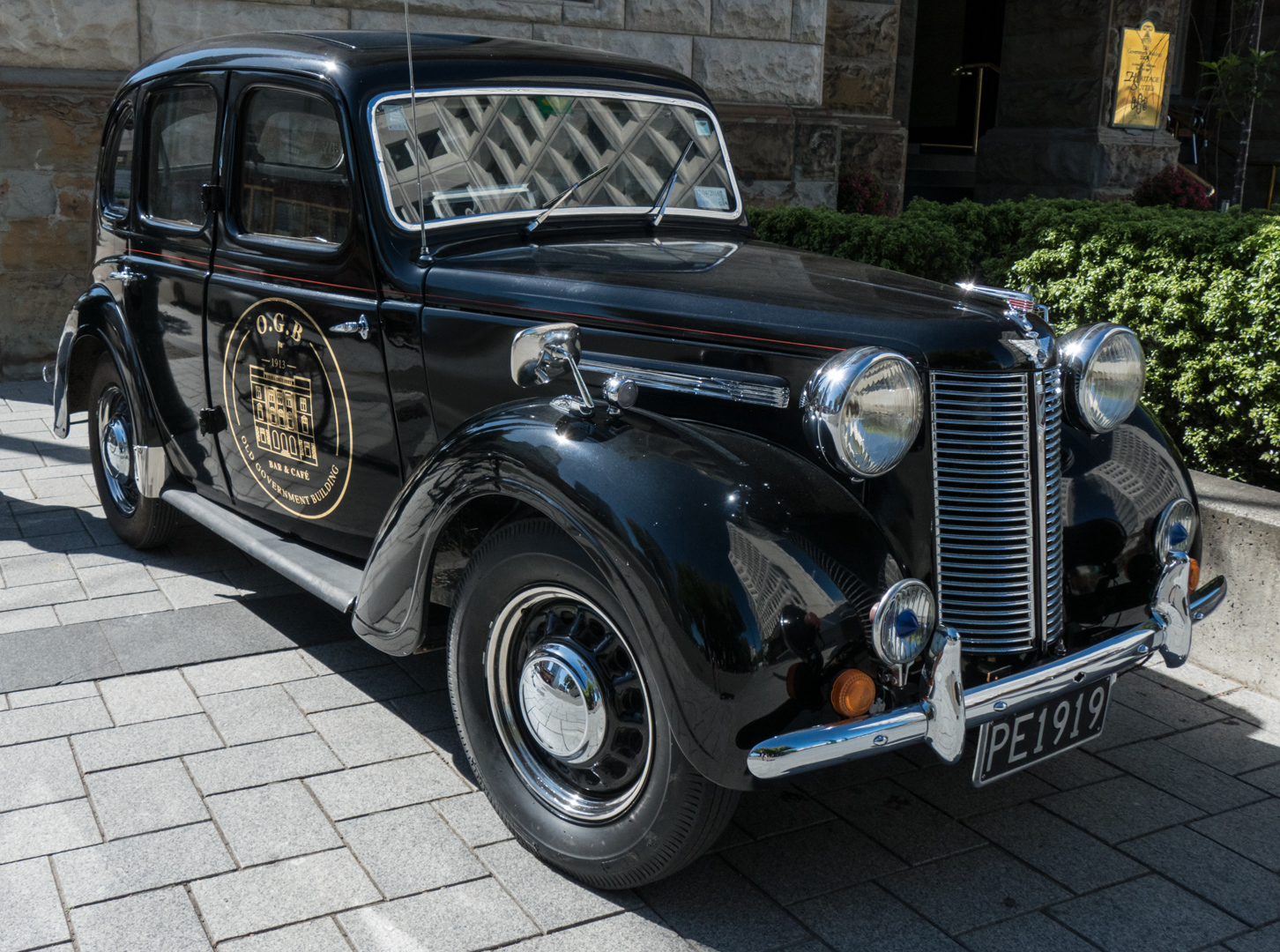
At the back of the Cathedral I spotted this car - a 1946 Austin 10 in beautiful restored condition.
It reminded me of my first ever car back in 1966 - a 1939 Austin 10. Looked identical to this one except for the colour. It cost me 70 pounds (pre decimal currency days!!). Loved that car - even if I did manage to roll it on the road into Lake Sumner one Friday night. With help, got it back on it's wheels, poured the oil back in and drove it home. Hardly dented such was the quality (and thickness) of the body - but sufficiently for my parents to notice unfortunately. I used to drive it down to Mt Cook to go climbing. Took ages to get there. Sold it a year later for 68 pounds!!


Checking out the City

I've been home a week.
It was time to check out progress with the city rebuild. Chris and I biked in to town yesterday morning. I hadn't seen it for nearly five months so it was good to catch up.
It's certainly happening - and will be a great place  to hang out in, in a few years time. I just wish they would make a few decisions re the big ticket items - the Convention Centre, the Sports Metro, the Stadium - and the Cathedral. At the present rate, the CDB will be completed and the Square will remain dead. Funny, I should be making this remark on the fifth anniversary of the big earthquake!
There's a few new pieces of street art, Spectrum is still on, there's a corrugated iron exhibition at the museum, the Art Gallery has reopened after being closed since the earthquake - so I've got plenty to go see over the next few months.
Yesterday I couldn't resist a few images in town.

Mowing the lawns - Restart Mall
Set Free - new Margaret Mahy playground
Feature Wall - new Margaret Mahy playground
New Street Art - Dr Zeuss?

Saturday, February 20, 2016

Crossing the Empty Quarter #2

Three months on...........mission accomplished.
I got home one week ago after a successful expedition through the Empty Quarter from Salalah in Oman to Doha in Qatar. The journey took 49 days - starting on 10th December (the same date Bertram Thomas started 85 years ago) and ending on 27th January 2016.
Although I was only a member of the Support Team, it was a busy time some days. Responsibilities included support vehicle driver, photographer, quartermaster, medic, money man.
The walking team stuck to their knitting and averaged 26-27 kms per day throughout the 1300 km journey. We started with 4 camels and finished with 3 - the 4th was red-carded after about the 10th day and sent back to bootcamp because of bad behaviour. The support vehicles performed well throughout the entire journey, and although they got stuck on multiple occasions, the drivers were able to extricate their vehicles without support - a pretty good performance considering the terrain.
In total I captured ~4300 images. I have now whittled these down to ~250 for use in lectures, expedition book, etc.

The walking team deep in the Rub Al Khali
The Oman - Saudi Arabia border
Sand Boa - the only snake we saw
First steps on a moody day
New moon in southern Oman
The only arrowhead found despite extensive searching
Riding through the sabkha at the northern limit of the Rub Al Khali
Typical terrain the middle section of the Rub Al Khali
Only ever seen in January - the Southern Cross and the Pointers - at dawn
I will post a further eight images in a day or two. I don't want you to have all the fun at once!!


Sunday, November 15, 2015

Crossing The Empty Quarter #1

The Rub Al Khali - the Empty Quarter. The largest sand desert in the world.
An Englishman born in Pil (home of my paternal grandparents - another story) became the first 'white man' to cross the Rub Al Khali from Salalah to Doha in 1930 -31. He was assisted by many camels and tribesmen throughout the 60 day journey. His name was Bertram Thomas.

85 years later, this journey will be recreated. My English friend Mark Evans has put together a small team of people - two Omanis, himself, and a handful of camels to walk the 1100-1200 kilometres following in Bertram Thomas's footsteps. In addition will be be two others, driving the two support vehicles, capturing the journey on movie and still photography, searching for archeological items, etc.

I am fortunate to be one of those two support people - and may become the first Kiwi to cross the Rub Al Khali. I depart NZ on the 15th November 2015. The actual journey will commence on the 10th December at Salalah - the same day Thomas started 85 years ago. I am due back home on 26th February 2016.

The expedition can be followed on www.crossingtheemptyquarter.com
Bertram Thomas's map 1930-31 (the solid red line is the route we plan to follow)

Monday, November 9, 2015

Bucket List.

We all have a bucket list - or at least we all should have. Those things to tick off before before we can no longer do so - mountains to climb, valleys to tramp, huts to visit, countries to explore, cities to investigate, galleries and museums to wander through - and friends to visit.
My list is long - very long. So long, I figured that I needed to live to 150 to complete the list. The trouble is, I keep adding to the list - faster than I can tick items off. A few years I drew a short straw and was diagnosed with prostate cancer, now treated and all behind me - but it did make me stop and think about that bucket list. Can I really complete it and do I really still want to do all that? I looked thoroughly at that bucket list and came to the conclusion that, allowing for slowing down (something I hate to admit is gradually happening) and a few other distractions, I could maybe complete that list by the time I'm 145 years old. I've cut 5 years off the original estimate!!

This all brings me back to the present. Earlier this year I had the opportunity to accept a place on a tour to China and Tibet with the New Zealand China Friendship Society. A photographic tour and I knew many of the other participants planning to go. The price was good so it was a no-brainer. I was going!
And so to attend to two items on my bucket list.
1. Since I was a teenager, I've wanted to see the Polata Palace in Lhasa, Tibet. Tibet is a country that has always fascinated me - for its culture, religion, monasteries, altitude, people - and of course its mountains. It is a country that has gone through a huge amount of angst since the 1950s.
2. I've also wanted to see the panda bears. Ideally I would like to see them in their natural habitat but that is virtually impossible so I was happy to see them in a sanctuary.

Maybe later I will talk about the rest of the China/Tibet journey, but for now share with me these two ticked items on my bucket list. Both hopefully will be revisited with Chris at a later date - maybe enroute to other bucket list items.

Breakfast at the Great Panda Centre near Chengdu
Almost replete
Polata Palace at dusk - Lhasa, Tibet